For several years, I associated success with clarity: well-defined goals, detailed plans, predictable paths.
I believed that growing meant knowing exactly where to go. However, life — and especially entrepreneurship — showed me the opposite.
I discovered that true self-knowledge is born in the terrain of uncertainty, and that sometimes you need to get a little lost to truly find yourself.
When I left Brazil to live in Ireland, I carried with me a dream, but also a lot of certainties that would soon cease to make sense.
Arriving in a new country, with a different culture and language, was like landing in another me.
Suddenly, everything that defined me until then seemed distant: the codes, the references, the feeling of belonging.
That disconnect was uncomfortable, but essential.
Losing myself was the first step to understanding who I really was — and who I could still become.
There is a kind of wisdom that only emptiness offers. When we get lost, we are forced to silence automatic responses and revisit the questions we have avoided.
It is in this space of confusion that clarity begins to emerge. That’s how it was for me.
The certainties that sustained me needed to crumble so that new perspectives could arise.
I learned that there is no true reunion without first going through the experience of loss — and that, behind every disorientation, there is an invitation to mature.
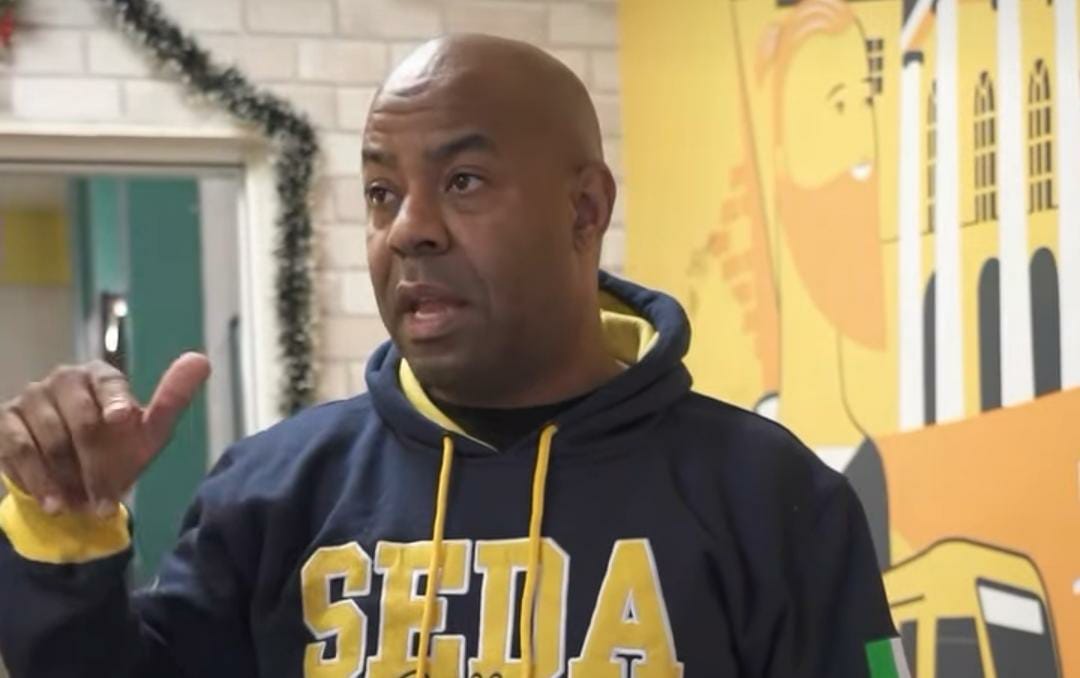
SEDA was born from this journey. In the beginning, there was no foolproof plan, only the sincere desire to create opportunities for those who, like me, had left everything behind.
Between mistakes, adjustments, and restarts, I understood that the path of purpose is anything but linear.
It is made of doubts, pauses, and redirections.
But it was precisely in moments of confusion that I found the most authentic direction: to transform education into an instrument of real change.
Getting lost, I realized, is not failing. It’s about allowing yourself to fall apart in order to rebuild more consciously. It’s a painful process, but profoundly human.
Because, contrary to what we usually imagine, finding yourself isn’t about returning to the starting point—it’s about seeing what was left behind and, from that, choosing to move forward differently.
Today, I understand that the periods of disorientation were the most fertile of my journey. They taught me to value silence, patience, and the power to start over.
Getting lost was the price I paid to truly grow.
And, looking back now, I realize it was worth it—because it was in this process that I found something that no plan could give me: my own essence.